
Stocks closed their strongest calendar quarter since December 2020 in June, with US shares topping their February record, as earnings optimism outweighed geopolitical concerns and trade tensions. European stocks fell, paring their year-to-date advantage.
The STOXX® World AC added 4.5% last month when measured in US dollars and including dividends, for a second-quarter advance of 12%. The benchmark climbed only 1.1% in euros in June as the greenback slid 3.1% against the common currency amid expectations that the Federal Reserve will cut interest rates. The STOXX® Global 1800 index jumped 4.4% in dollars last month.
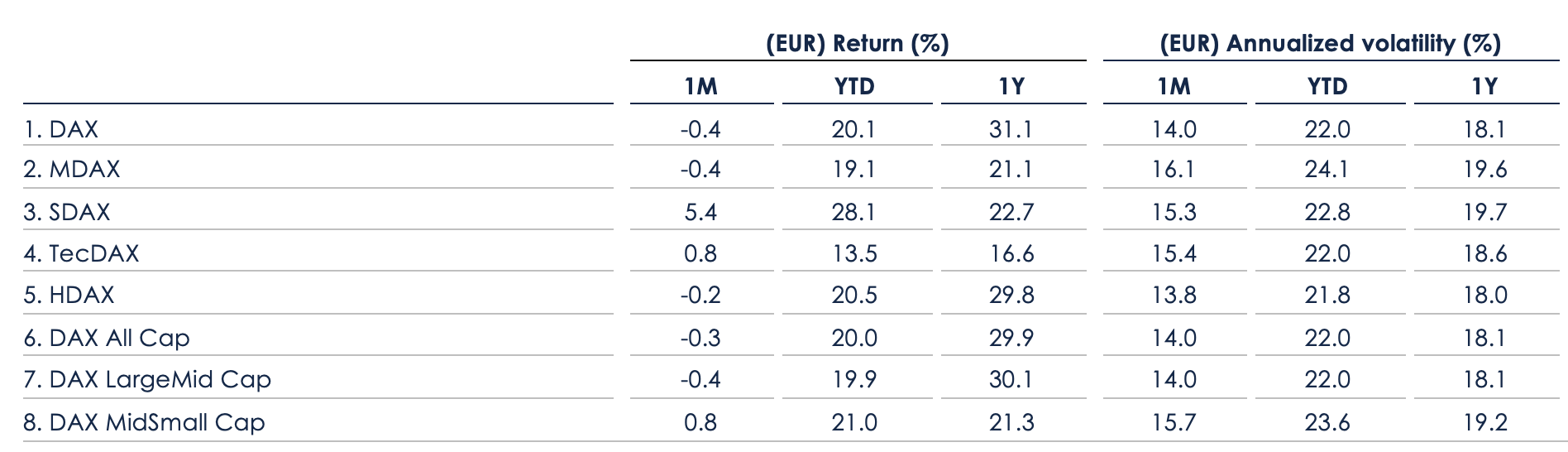
The Eurozone’s EURO STOXX 50® dropped 1% in euros in the month[1], while the pan-European STOXX® Europe 600 retreated 1.2%. Germany’s DAX® and MDAX®, which gauges the performance of German mid-caps, both fell 0.4%. The STOXX® USA 500 rose 5.3% and climbed above its February record. The STOXX® Asia/Pacific 600 added 2.2%. The STOXX® Developed World climbed 4.4% and the STOXX® Emerging Markets gained 6%.
Figure 1: STOXX Equity World indices’ June risk and return
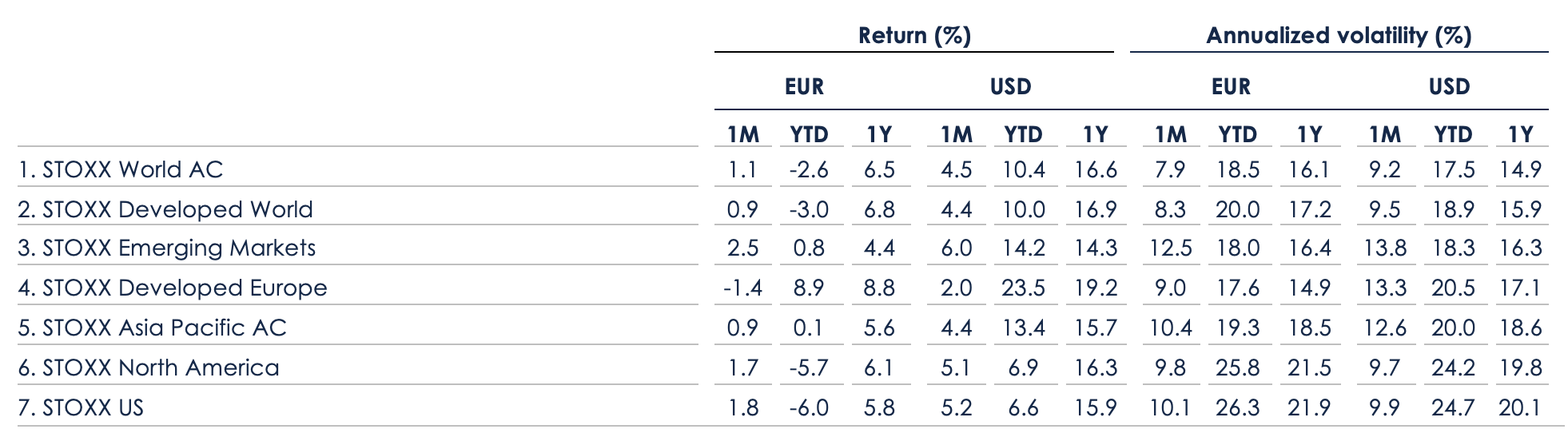
Figure 2: STOXX Benchmark indices’ June risk and return
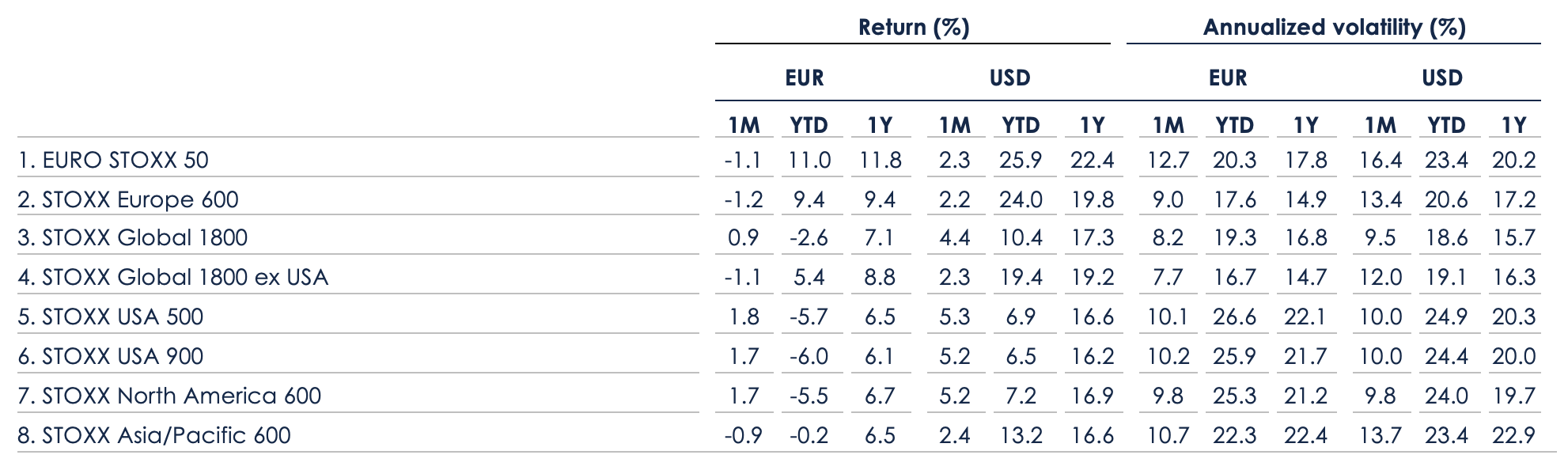
Figure 3: DAX indices’ June risk and return
| For a complete review of all indices’ performance last month, visit our June index newsletter. |
Earnings, trade
Throughout the month, investors and traders focused on the outlook for U.S. corporate earnings, speculating that ongoing economic growth will offset geopolitical disruptions —including a halt in oil supply following military action involving the US and Israel in Iran. Meanwhile, the US administration continued trade negotiations with other nations aimed at limiting potential import tariff increases.
NVIDIA, the chipmaker that’s become the hallmark of artificial intelligence’s growth, climbed to a record in June amid ongoing expectations of investments in the technology.
Figure 4: Total annual % returns for STOXX World AC index

Figure 5: Select STOXX benchmarks’ returns since 2023

Volatility eases slightly
The VSTOXX® (Eurozone equity volatility), which tracks the prices of EURO STOXX 50 options traded on Eurex, slipped to 17.7 in June from 19.2 in May. A higher VSTOXX reading suggests investors are paying up for puts that offer insurance against stock price drops. The VDAX®, which measures volatility in German equities, dropped to 18.4 from 20.5 a month earlier.
Factor investing
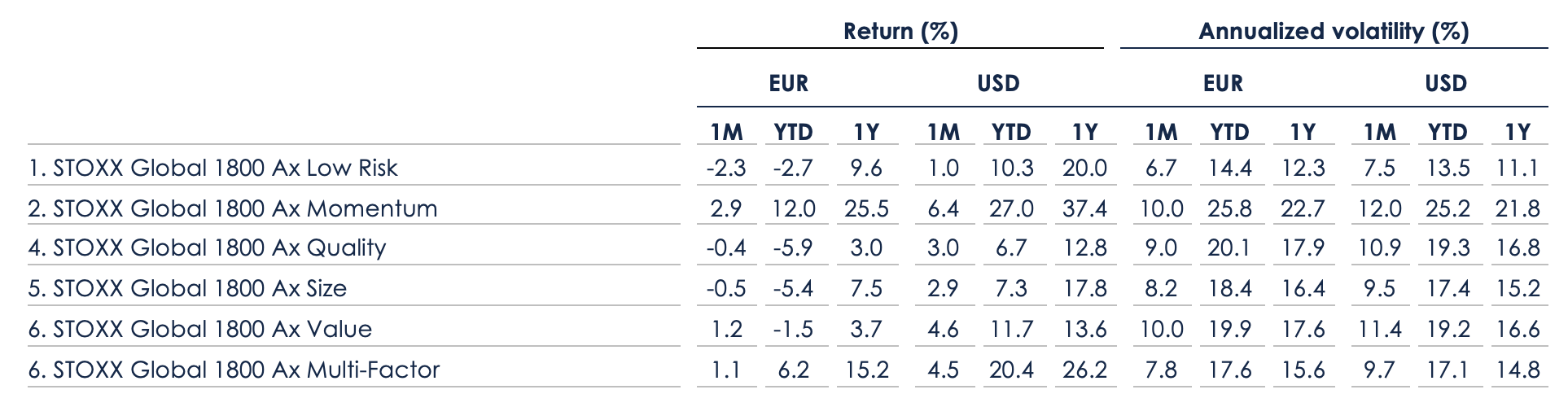
Among the STOXX Factor indices, the Momentum signal continued to lead gains last month, extending its edge for 2025 (Figure 6).
Figure 6: STOXX Factor (Global) indices’ June risk and return characteristics
Climate benchmarks
Within climate benchmarks, the ISS STOXX® Developed World Net Zero Transition added 4.6%. The index is focused on net-zero targets and real-world transition-aligned metrics, and includes all industries featured in the parent universe.
The STOXX® Global 1800 Paris-Aligned Benchmark (PAB) rose 2.3%, while the STOXX® Global 1800 Climate Transition Benchmark (CTB) gained 2.4%. The PAB and CTB indices follow the requirements outlined by the European Commission’s climate benchmarks regulation.
Sustainability indices
The STOXX® Global 1800 ESG-X index rose 4.6% in the month. The STOXX® ESG-X indices are versions of traditional, market capitalization-weighted benchmarks that observe standard responsible exclusions.
The DAX® ESG Screened fell 1.1%. The index reflects the composition of the DAX benchmark minus companies that fail to pass norms-based and controversial weapons screenings, meet minimum ESG ratings or are involved in certain business activities considered undesirable from a responsible investing perspective.
Within indices that combine exclusions and best-in-class ESG integration, the EURO STOXX 50® ESG index dropped 1.3% over the month. Germany’s DAX® 50 ESG index (-0.7%)[2], which excludes companies involved in controversial activities and integrates ESG scoring into stock selection, underperformed the benchmark DAX in the month.
The STOXX® Global 1800 SRI added 3.4%. The STOXX SRI indices apply a set of carbon emission intensity, compliance and involvement screens, and track the best ESG performers in each industry group within a selection of STOXX benchmarks.
Thematics, digital assets
Thirty of 42 STOXX® Thematic indices outperformed the benchmark STOXX Global 1800 last month. The STOXX® Global Smart Factory index had the best performance in the suite, rising 12.3%.
The STOXX® Digital Asset Blue Chip index, which aims to track high-quality assets that represent the crypto universe today, dropped 2.7% in the month.
Dividend strategies
Dividend strategies had positive performances in dollars in the month that ended. The STOXX® Global Maximum Dividend 40 (+1.1% on a net basis) selects only the highest-yielding stocks. The STOXX® Global Select Dividend 100 (+3.2%) tracks companies with sizeable dividends but also applies a quality filter such as a history of stable payments.
Minimum variance
Minimum variance strategies underperformed. The STOXX® Global 1800 Minimum Variance fell 0.1%, as did the STOXX® Global 1800 Minimum Variance Unconstrained.
The STOXX Minimum Variance Indices come in two versions. A constrained version has similar exposure to its market capitalization-weighted benchmark but with lower risk. The unconstrained version, on the other hand, has more freedom to fulfill its minimum variance mandate within the same universe of stocks.
[1] Throughout the article, all European indices are quoted in euros, while global, North America, US, Japan and Asia/Pacific indices are in US dollars.
[2] Figures in parentheses show last month’s gross returns.